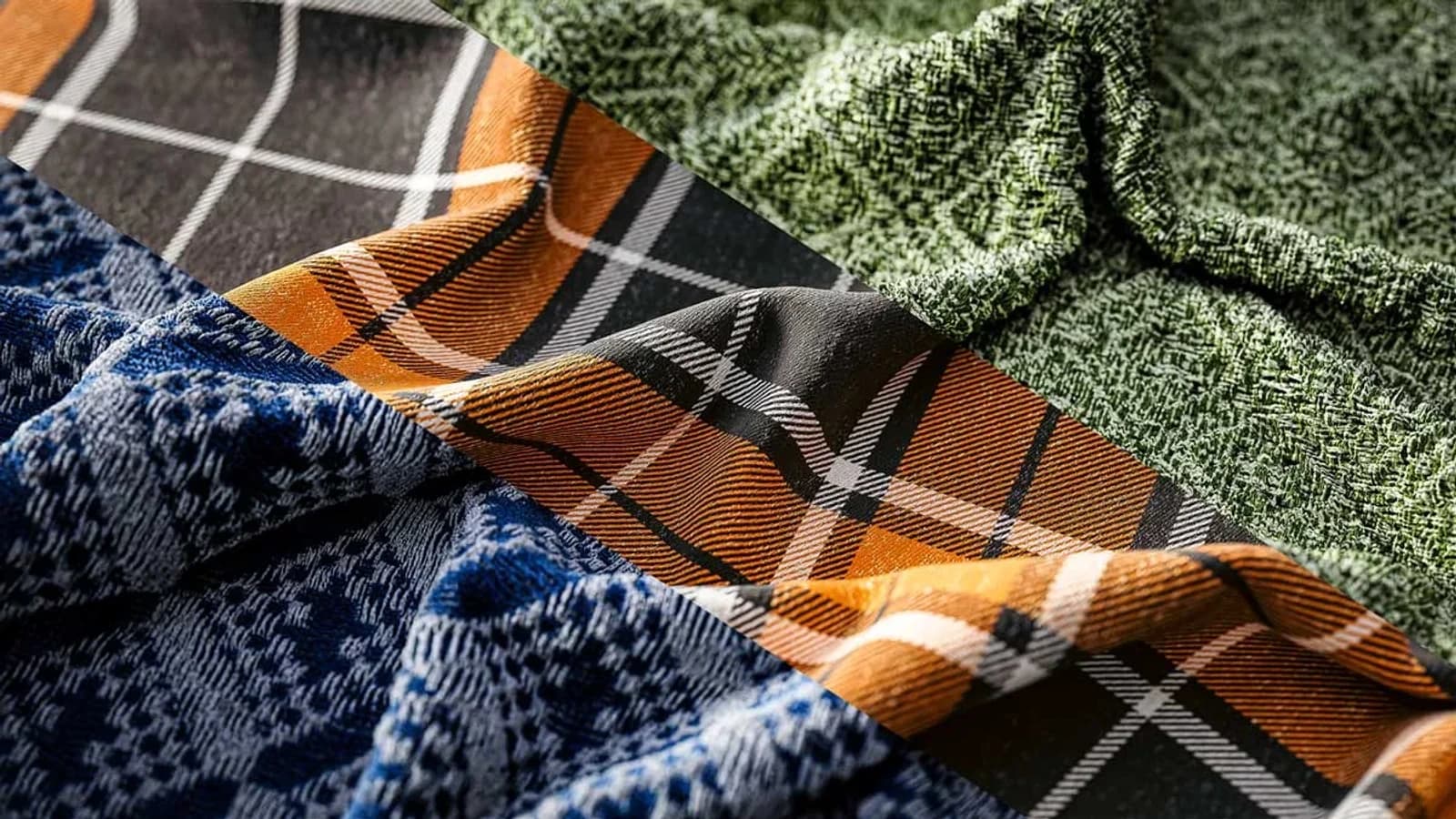
A scanned fabric photograph is a snapshot of one piece of cloth, at one scale, under one light. The moment the art director asks for the same weave in a different colourway, or a tighter thread count, or the same jacket in a worn-out variant, you are back at the photo library.
The weave is a rule, not an image
Cloth is one of the most rule-driven surfaces there is. Warp and weft, a repeat, a thread profile, a little irregularity. All of that is a handful of nodes. Once the graph exists, the plaid becomes a different plaid by changing three parameters, and the plain weave becomes canvas by changing thread thickness.
Displacement is what sells it
Normal maps flatten out at grazing angles, and cloth is almost always viewed at grazing angles — that is what a fold is. Real height data, driven into a displacement or a tessellated preview, keeps the weave readable in silhouette. It is the single biggest quality jump available to a fabric material.
Where photos still win
Scans are still better for one-off hero surfaces that will never be re-scaled or recoloured: a specific antique rug, a branded label, a printed graphic. Use them there. Build everything you will need twice.