View asset →
Featured
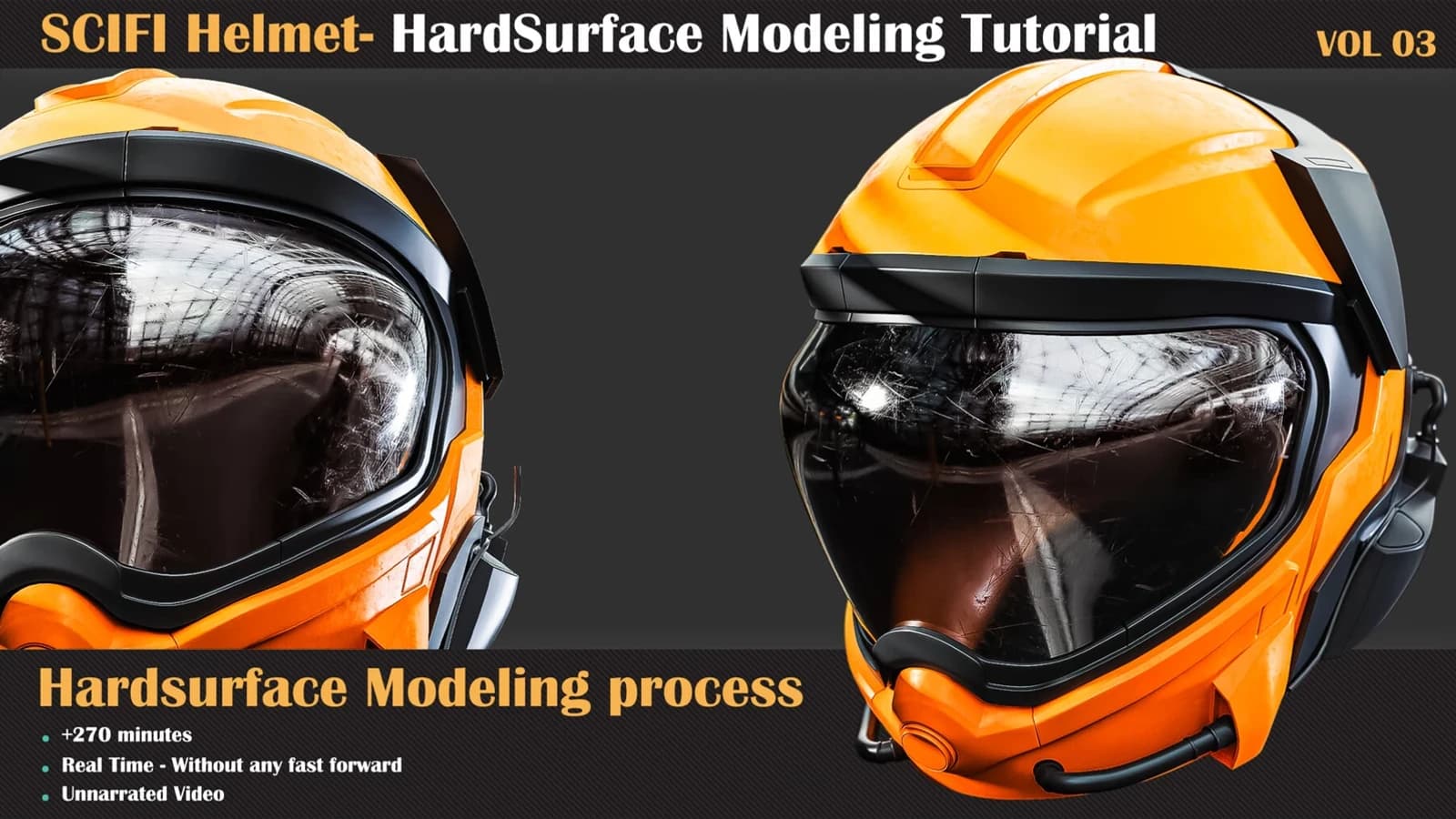
Hardsurface Tutorial Collection — VOL 03 - Scifi Helmet
Hardsurface Tutorial Collection VOL 03 takes a sci-fi helmet from 2D concept to finished hard-surface mesh in 270 unnarrated minutes of 3ds Max.
$9.99
Not available yetA futuristic vacuum cleaner, drawn as a 2D concept and modelled from nothing in 3ds Max: at 640 minutes this is the longest volume in the Hardsurface Tutorial Collection, better than ten and a half hours of continuous screen capture with no fast-forwarding anywhere in it.
Length is the whole argument for this one. A ten-hour recording of a single prop shows the parts of hard-surface work that shorter tutorials cut — the slow blocking of a silhouette before any detail is committed, the re-doing of a panel that did not read properly, the long tail of small mechanical additions that turn a shape into an object.
In practice nobody sits through this in one go, and it is not meant to be. Treat it as a build you return to: match where you are in your own file to where the recording is, work a session, stop. Because the capture is silent, following it is a matter of watching the viewport rather than listening for instructions, so the useful habit is to keep the video paused more often than playing and to rebuild each step yourself before advancing it.
Basic knowledge of 3ds Max — how to move around a scene and use its primary functions. Everything specific to hard-surface modelling is shown. You do not receive the vacuum itself: no model file, no project files, only the recording of it being made, which is what is being sold.
Each tutorial follows one asset from start to finish in real time. Every decision is explained as it is made, so you can see not just what was done but why that approach was chosen over the alternatives.
Hardsurface Tutorial Collection VOL 03 takes a sci-fi helmet from 2D concept to finished hard-surface mesh in 270 unnarrated minutes of 3ds Max.
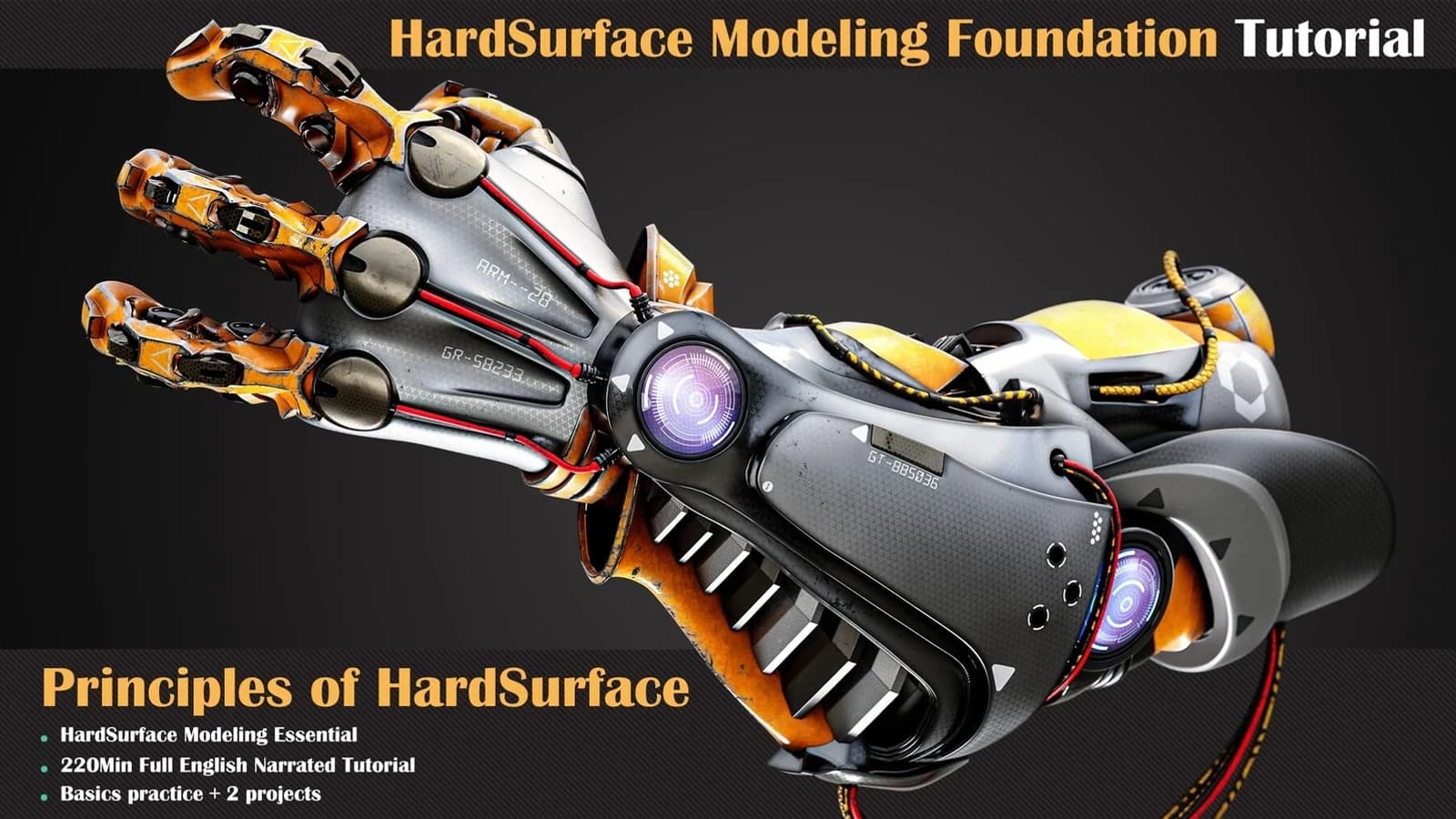
Learning the basics of a job is one of the most important things to consider.
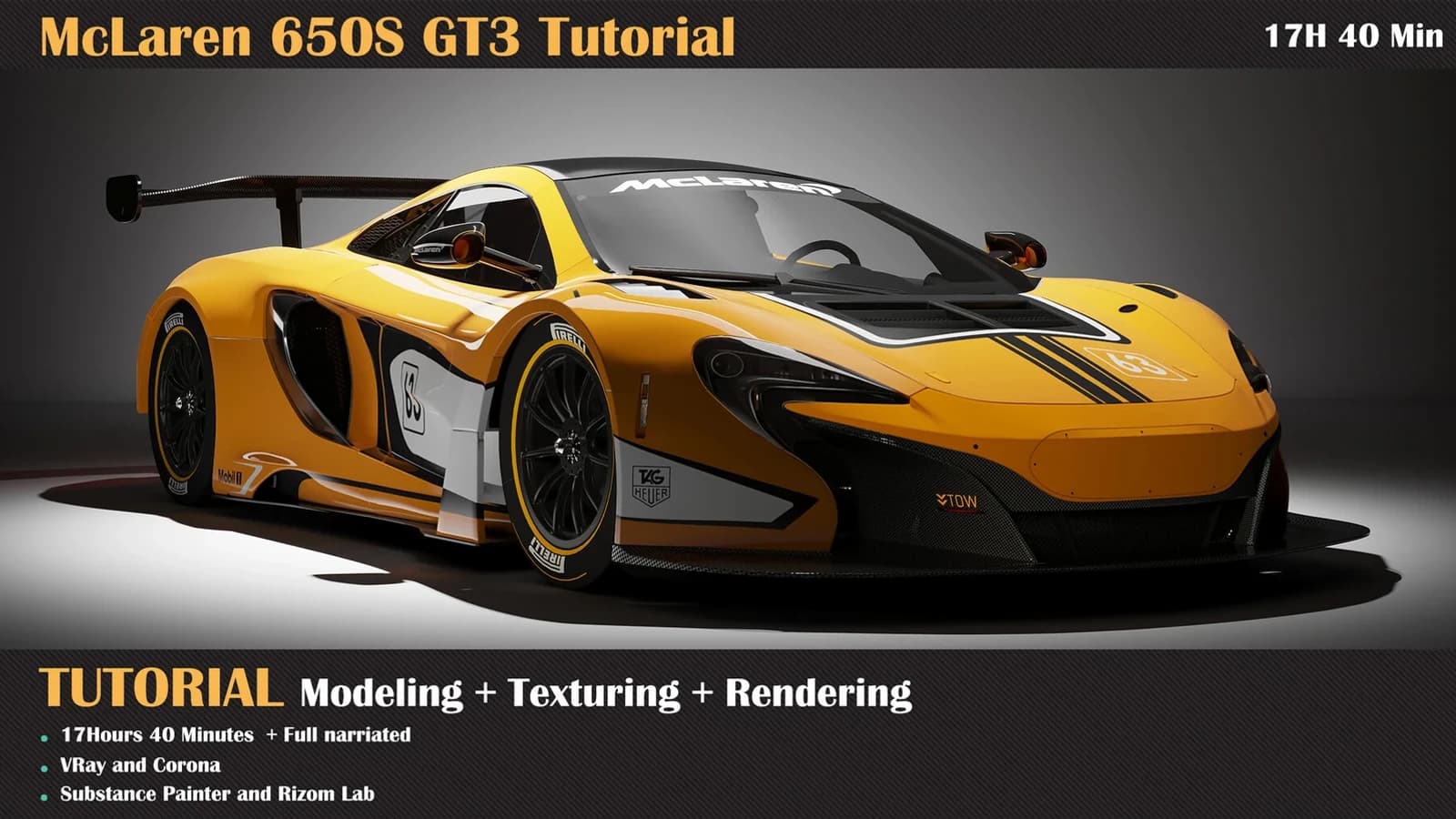
McLaren 650S GT3 Tutorial ( Modeling, Texturing, Lighting ). MP4 included. Built for Substance Painter and 3ds Max. Published November 2021.
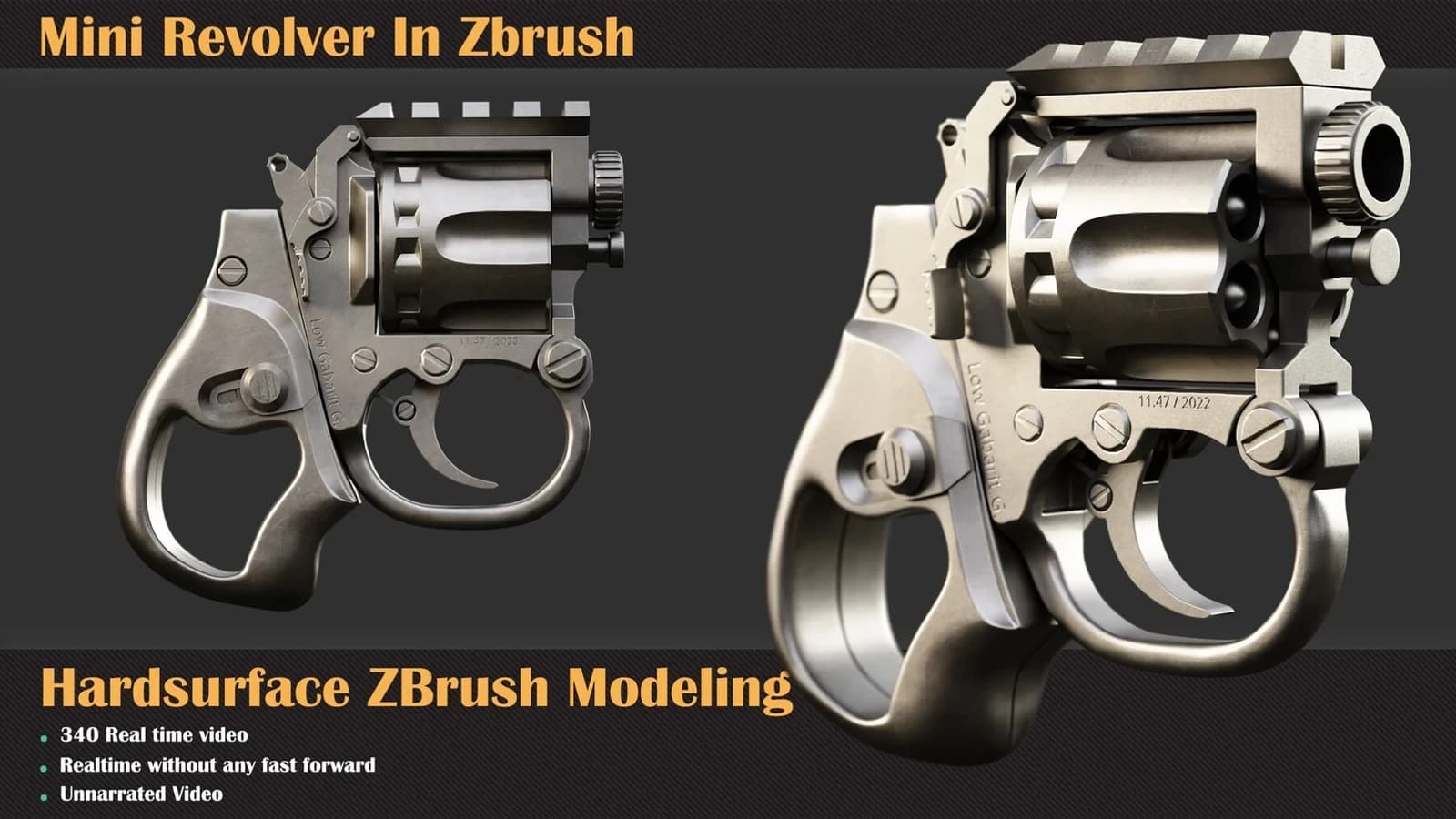
This product is the first part of the ZBrush modelling video process, and in the first part, we decide to have a Hard-surface model.